
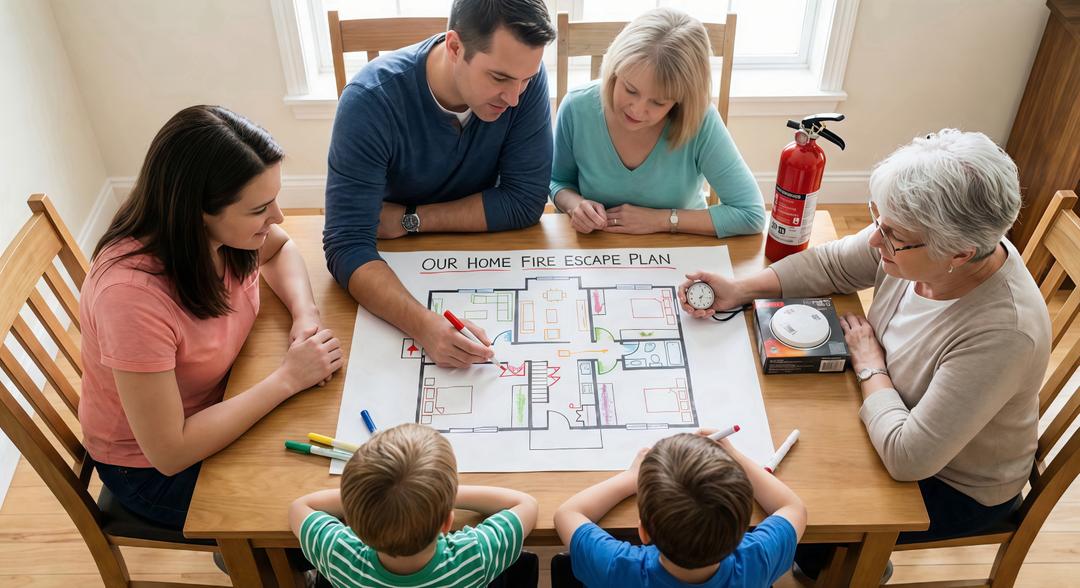
In a house fire, you have as little as 2 minutes to escape safely. Having a well-planned and practiced escape plan can mean the difference between life and death for your family.
Step 1: Map Your Home’s Escape Routes
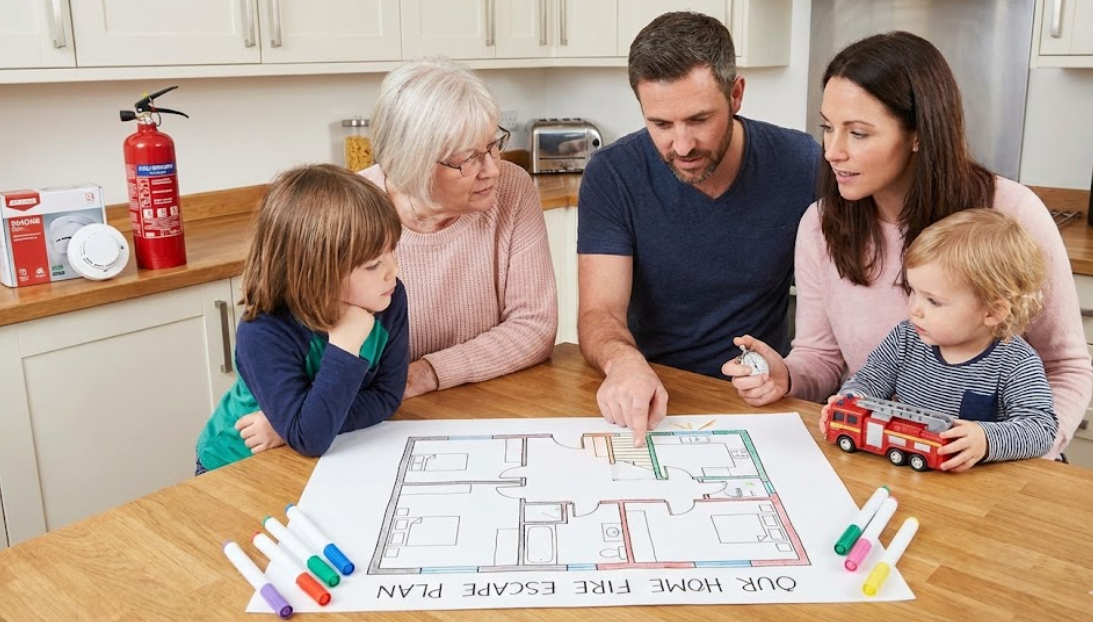
Draw Your Floor Plan – Sketch each floor of your home, marking all doors and windows. Include basements and upper floors.
Identify Two Ways Out – Every room should have two escape routes when possible – typically a door and a window. Mark both primary and secondary exits clearly.
Check Window Accessibility – Ensure windows open easily and aren’t blocked by furniture, security bars, or air conditioning units. Consider escape ladders for upper floors.
Mark Obstacles – Note potential barriers like heavy furniture, security systems, or locks that might slow escape during an emergency.
Step 2: Choose Meeting Points
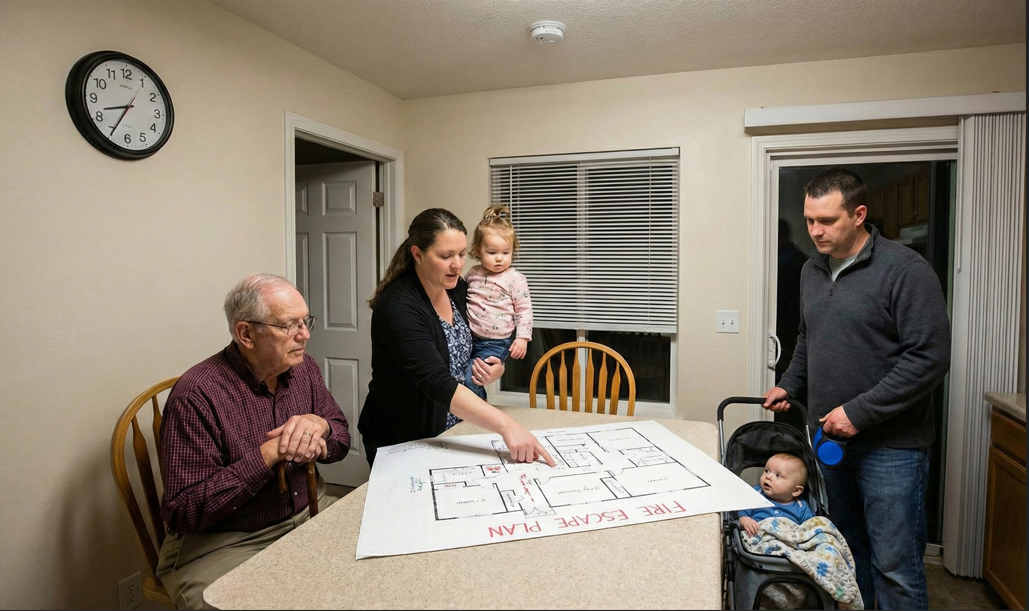
Primary Meeting Point – Select a safe location away from your home where family members will gather. Good options include:
- Mailbox at the street
- Neighbor’s driveway
- Large tree in the front yard
- Street lamp or fire hydrant
Secondary Meeting Point – Choose an alternate location in case your primary spot is unsafe, such as a nearby school, community center, or relative’s home.
Make It Memorable – Pick locations that are easy for children to remember and find, even in darkness or confusion.
Step 3: Plan for Special Circumstances
Young Children – Assign adults to help children who can’t escape independently. Practice with them regularly so they know what to expect.
Elderly or Disabled Family Members – Create specific plans for those with mobility limitations. Consider special equipment or assistance needs.
Pets – Designate who will help pets escape, but teach family members that human safety comes first.
Different Times of Day – Plan escape routes for when family members are in different parts of the house (sleeping, working from home, etc.).
Step 4: Practice Your Plan
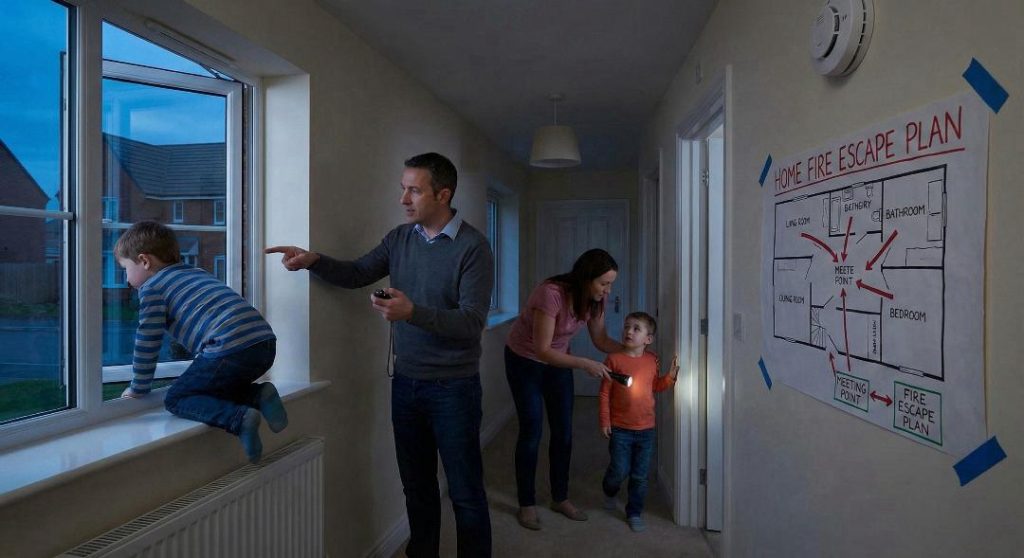
Monthly Fire Drills – Conduct escape drills at least once monthly. Practice both day and nighttime scenarios.
Time Your Escapes – See how quickly your family can evacuate. Aim for everyone to be at the meeting point within 3 minutes.
Practice in Different Conditions – Try escapes with lights off, doors blocked, or from different starting points in the house.
Test Equipment – Regularly check that windows open smoothly, escape ladders work properly, and flashlights have fresh batteries.
Step 5: Teach Critical Safety Rules
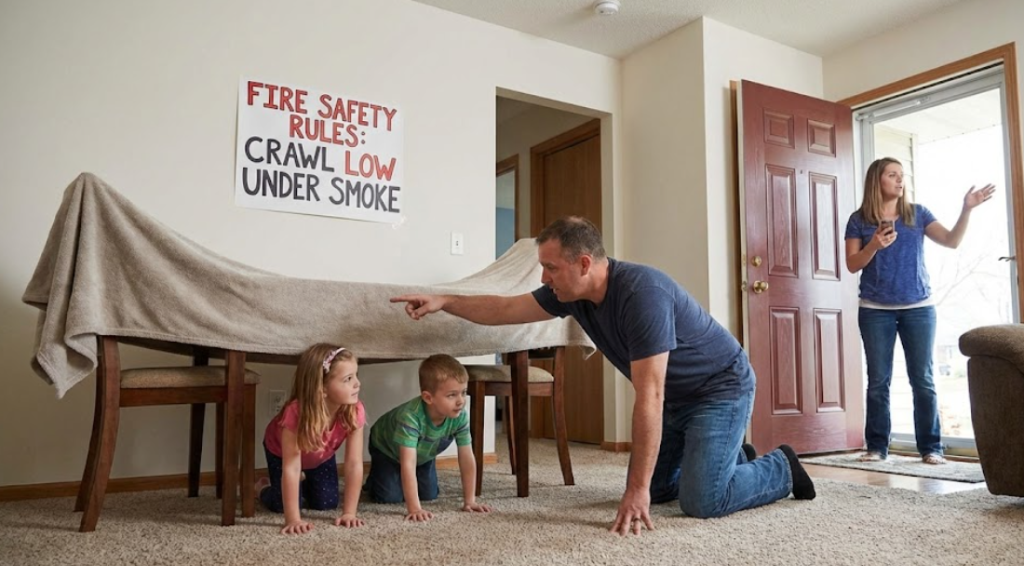
Get Out and Stay Out – Once outside, never go back inside for belongings, pets, or people. Let firefighters handle rescues.
Crawl Low Under Smoke – Smoke rises, so cleaner air is near the floor. Practice crawling to exits.
Check Doors Before Opening – Feel doors with the back of your hand. If hot, use your alternate escape route.
Call 999 from Outside – Don’t waste precious escape time calling for help from inside the house.
Step 6: Make Your Plan Visible

Post Escape Maps – Put copies of your escape plan in bedrooms, kitchen, and other key locations.
Share with Babysitters – Ensure caregivers know your family’s escape plan and meeting points.
Update Regularly – Review and update your plan when you move furniture, finish renovations, or when children grow older.
Special Considerations for Apartments
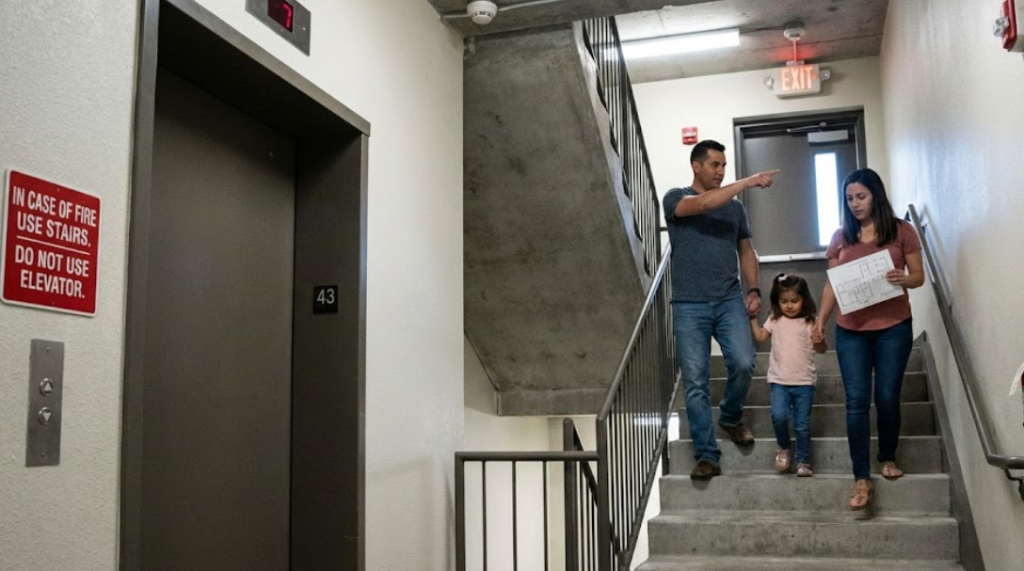
Know Building Exits – Familiarize yourself with all stairwells and exits in your building.
Never Use Elevators – Always use stairs during fire emergencies.
Check Hallways – If hallways are smoke-filled, stay in your apartment, seal door cracks, and signal for help from windows.
Emergency Kit Essentials
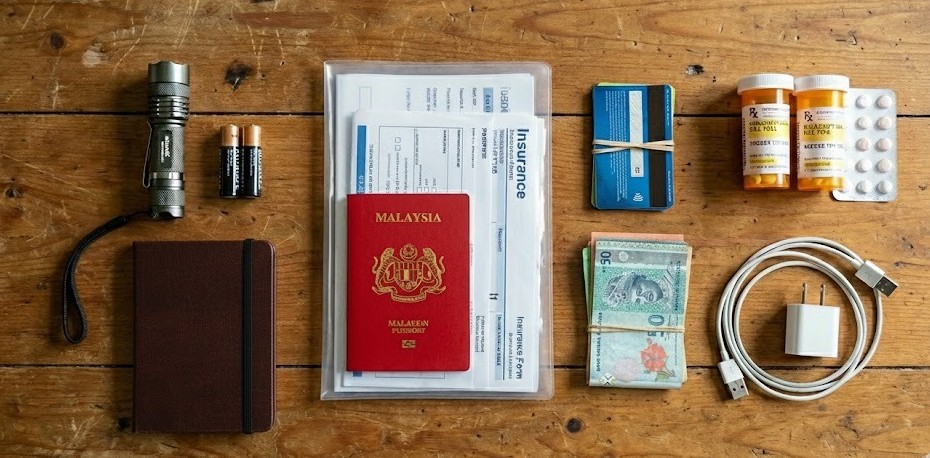
Keep a small emergency kit near your primary exit:
- Flashlight with extra batteries
- Emergency contact list
- Copies of important documents
- Cash and credit cards
- Medications
- Phone charger
The Bottom Line
A fire escape plan is only effective if your family knows it by heart. Regular practice builds muscle memory that works even when panic sets in. Take 30 minutes this weekend to create your plan, then practice it monthly.
Your family’s safety depends on preparation before an emergency strikes. Don’t wait – start planning your escape routes today.





Leave a Reply