
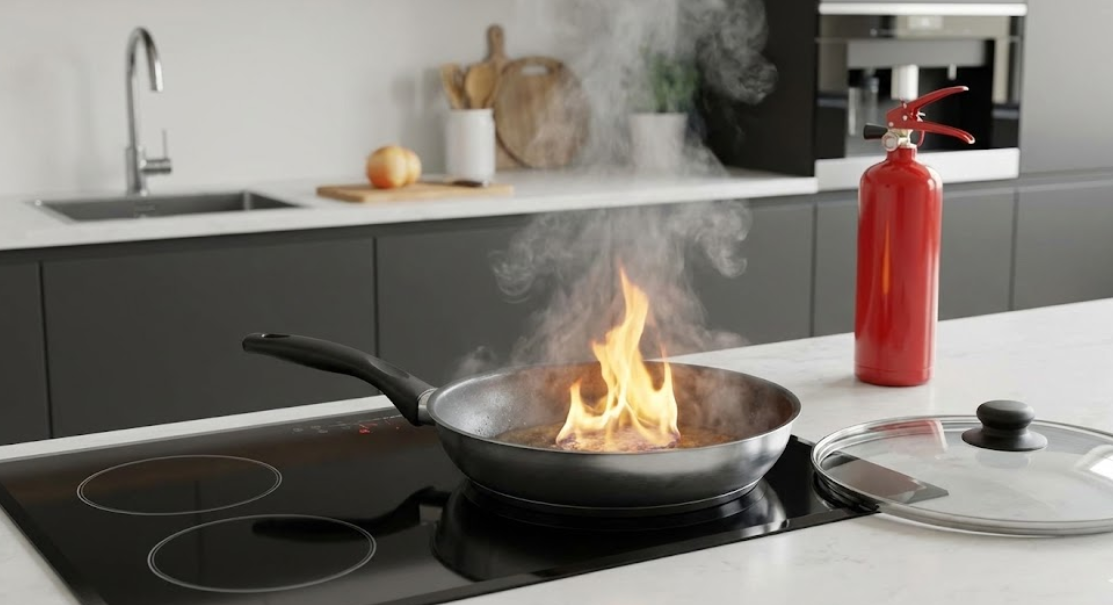
Your kitchen is statistically the most dangerous room in your house. Cooking fires account for 50% of all home fires and 44% of home fire injuries. The good news? Most kitchen fires are completely preventable with the right habits and precautions.
Why Kitchens Are Fire Magnets
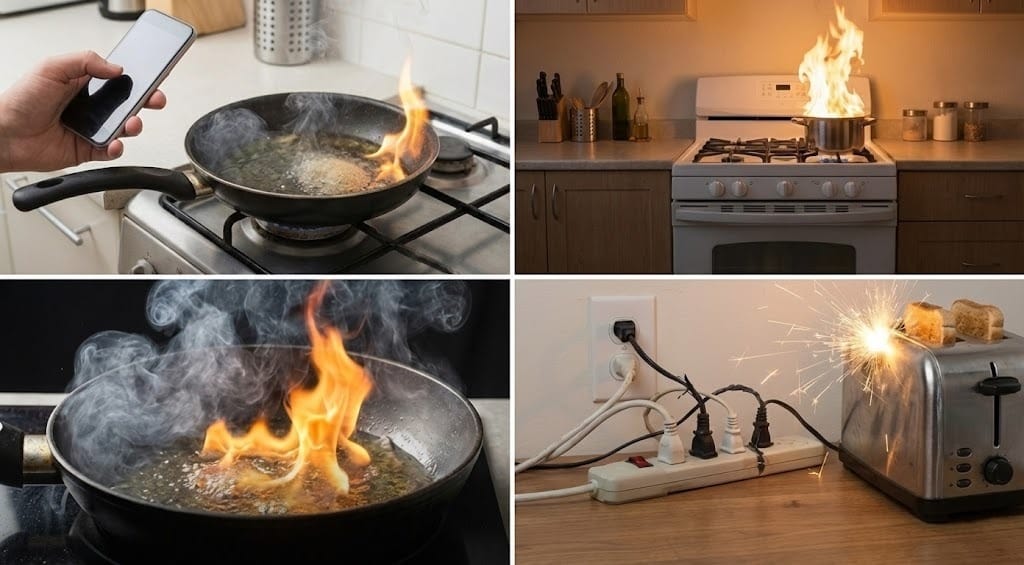
Heat + Fat + Distraction = Disaster – Cooking combines high temperatures, flammable oils, and busy multitasking. Add a phone call or crying child, and fires start in seconds.
Unattended Cooking is the #1 Cause – 31% of cooking fires happen when food is left unattended. It takes just 30 seconds for oil to ignite or food to catch fire.
Overheating Oil – Oil fires spread rapidly and can’t be extinguished with water. When oil reaches its smoke point, ignition follows quickly.
Equipment Malfunctions – Faulty appliances, frayed cords, and overloaded circuits create electrical fire risks in kitchens with high power demands.
Stovetop Safety Rules

Never Leave Cooking Unattended – Stay in the kitchen when frying, grilling, or broiling. If you must leave, turn off the heat.
Keep a Lid Nearby – When cooking with oil or grease, keep a lid next to the pan. It’s your fastest fire suppression tool.
Watch for Smoke Points – If oil starts smoking, it’s too hot. Remove from heat immediately and let it cool.
Clean Cooking Surfaces – Grease buildup ignites easily. Clean stovetops, ovens, and range hoods regularly.
Use Proper Pan Sizes – Oversized pans on small burners can overheat handles and surrounding areas.
Oven and Microwave Prevention
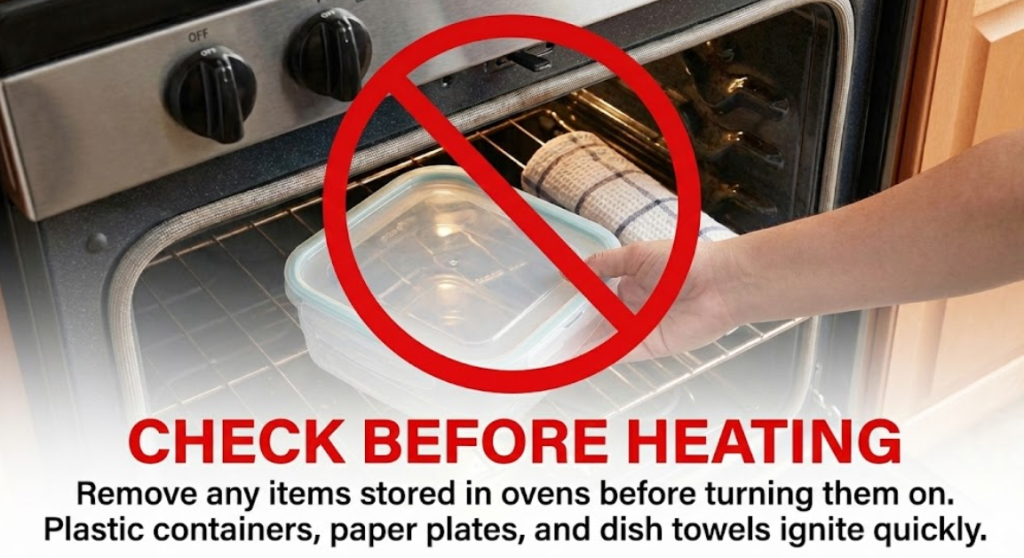
Check Before Heating – Remove any items stored in ovens before turning them on. Plastic containers, paper plates, and dish towels ignite quickly.
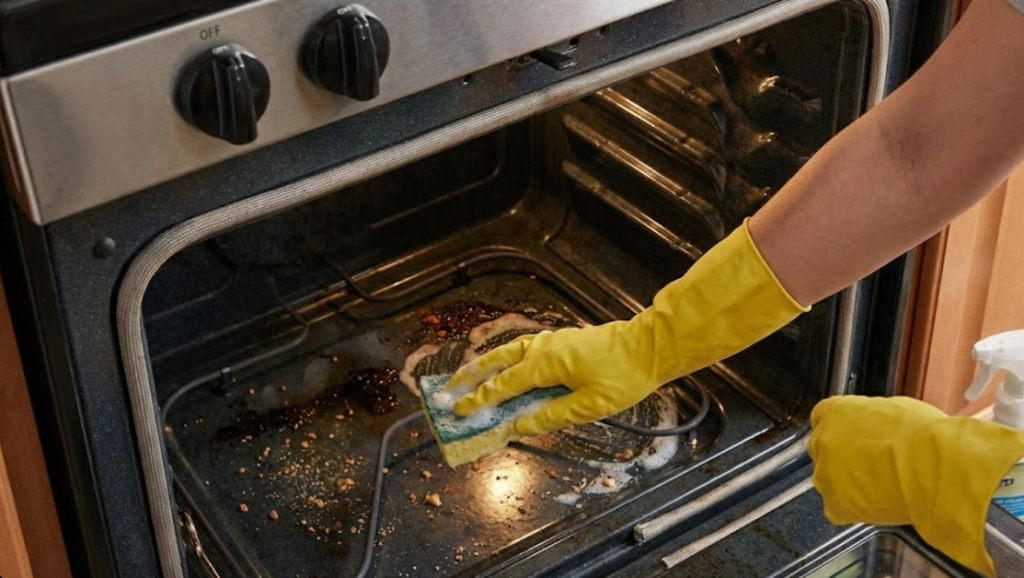
Clean Regularly – Food spills and grease in ovens create fire hazards. Clean monthly or after messy spills.
Monitor Cooking Times – Set timers and check food progress. Overcooked food can smoke and ignite.
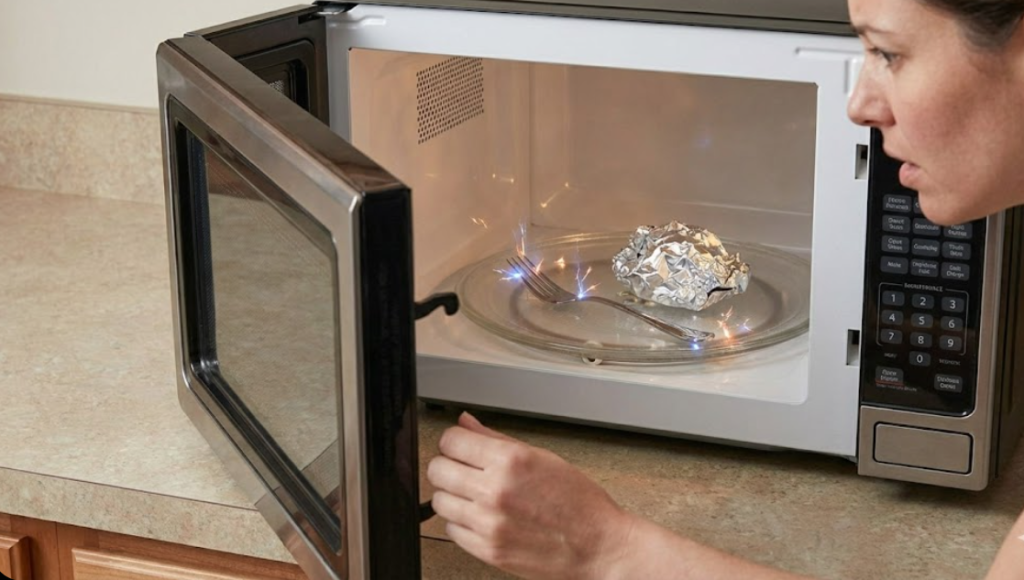
Microwave Metal Rules – Never put metal, aluminum foil, or dishes with metallic trim in microwaves. They cause dangerous arcing.
Electrical Safety in Kitchens
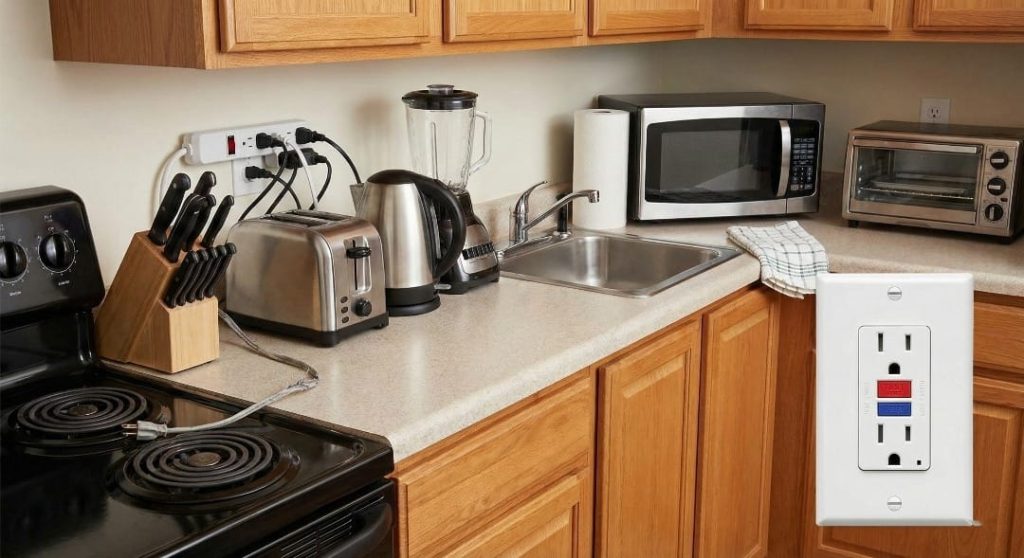
Avoid Overloaded Outlets – Kitchens have high electrical demands. Don’t plug multiple high-wattage appliances into the same outlet.
Check Appliance Cords – Replace frayed or damaged cords immediately. Keep cords away from heat sources and sharp edges.
GFCI Protection – Ensure all kitchen outlets have ground fault circuit interrupters, especially near sinks and wet areas.
Proper Appliance Spacing – Keep heat-generating appliances away from curtains, paper towels, and other flammable materials.
Grease Fire Emergency Response
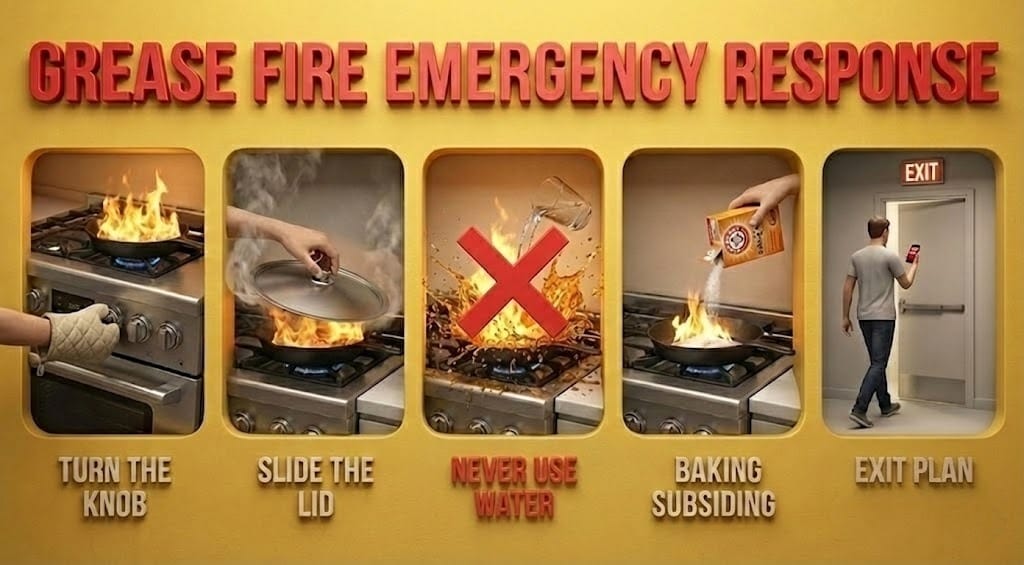
Turn Off Heat Source – If safe to do so, turn off the burner or oven immediately.
Cover with a Lid – Slide a lid over the pan to smother flames. Turn off heat and leave covered until completely cool.
Never Use Water – Water on grease fires causes dangerous splattering and spreads the fire.
Use Baking Soda for Small Fires – Pour liberally on small grease fires to help smother flames.
Have an Exit Plan – If the fire is spreading, get out and call 999. Don’t risk your life for property.
Fire Extinguisher Basics

Class K Extinguishers – Best for kitchen fires involving cooking oils and fats. Every kitchen should have one.
Proper Placement – Mount extinguishers near exits, not above stoves where fires might block access.
PASS Technique – Pull pin, Aim at base of fire, Squeeze handle, Sweep side to side.
Know When to Fight – Only use extinguishers on small, contained fires. If flames reach the ceiling or spread beyond the original source, evacuate.
Kitchen Design for Fire Safety

Clear Escape Routes – Keep kitchen exits unblocked. Don’t store items that could impede quick evacuation.
Proper Ventilation – Use range hoods to remove heat, smoke, and grease vapors. Clean filters monthly.
Safe Storage – Keep flammable items like dish towels, paper products, and curtains away from heat sources.
Smoke Detector Placement – Install detectors outside the kitchen to avoid false alarms while still providing early warning.
Daily Prevention Habits
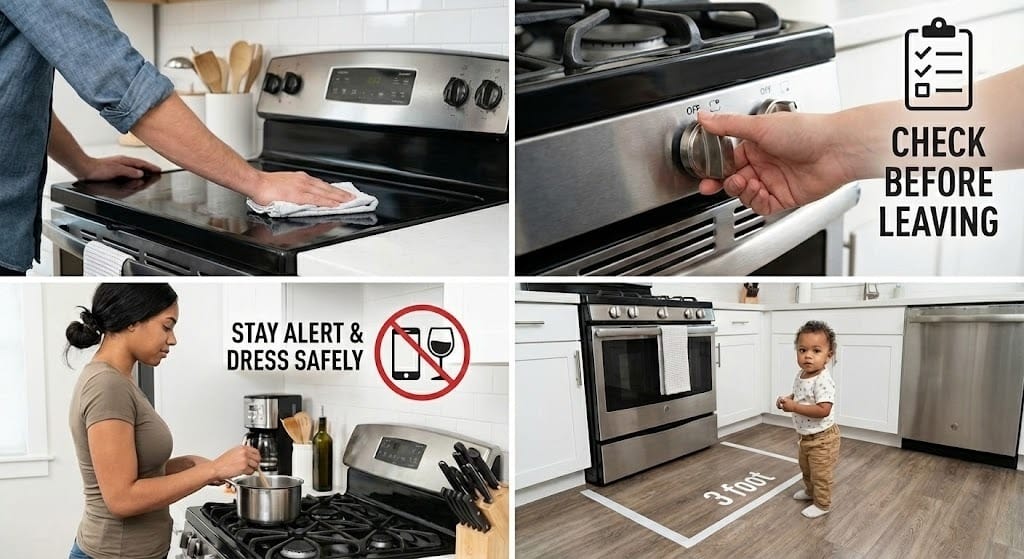
Clean as You Cook – Wipe up spills immediately and clean cooking surfaces after each use.
Check Before Leaving – Always verify all burners and appliances are off before leaving the kitchen or home.
Dress Safely – Avoid loose sleeves and flowing clothes while cooking. Tie back long hair.
Stay Alert – Don’t cook when drowsy, distracted, or under the influence of alcohol or medications.
Keep Kids Safe – Maintain a “kid-free zone” of 3 feet around stoves and other hot appliances.
Warning Signs to Address
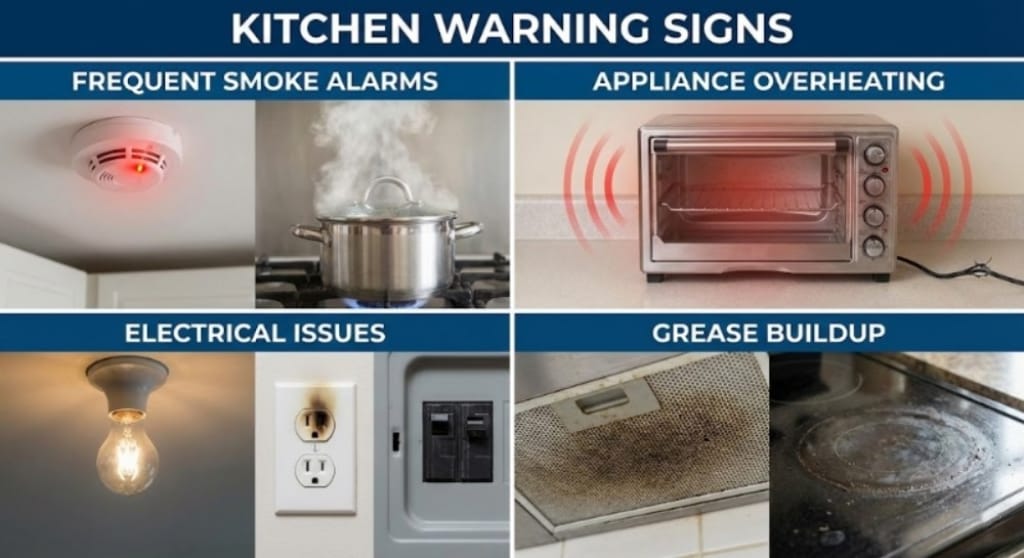
Frequent Smoke Alarms – If your smoke detector goes off often during normal cooking, improve ventilation or relocate the detector.
Appliance Overheating – Equipment that gets excessively hot or makes unusual noises needs professional inspection.
Electrical Issues – Flickering lights, warm outlets, or tripping breakers indicate electrical problems requiring immediate attention.
Grease Buildup – Heavy grease deposits on surfaces, range hoods, or exhaust fans create fire hazards.
Emergency Preparedness

Keep Fire Extinguisher Accessible – Mount within easy reach but away from potential fire sources.
Post Emergency Numbers – Keep 999 and local fire department numbers visible in the kitchen.
Practice Response Plans – Ensure family members know how to respond to kitchen fires and when to evacuate.
First Aid Kit – Keep burn treatment supplies accessible for minor cooking injuries.
The Bottom Line
Kitchen fires happen fast but are highly preventable. The key is developing safe cooking habits: stay present, keep surfaces clean, monitor temperatures, and respond quickly to problems.
Your kitchen feeds your family – don’t let it endanger them. Practice these prevention strategies consistently, and your kitchen will remain the heart of your home, not a fire hazard.
Remember: No meal is worth risking your family’s safety. When in doubt, turn off the heat and start over.



Leave a Reply