
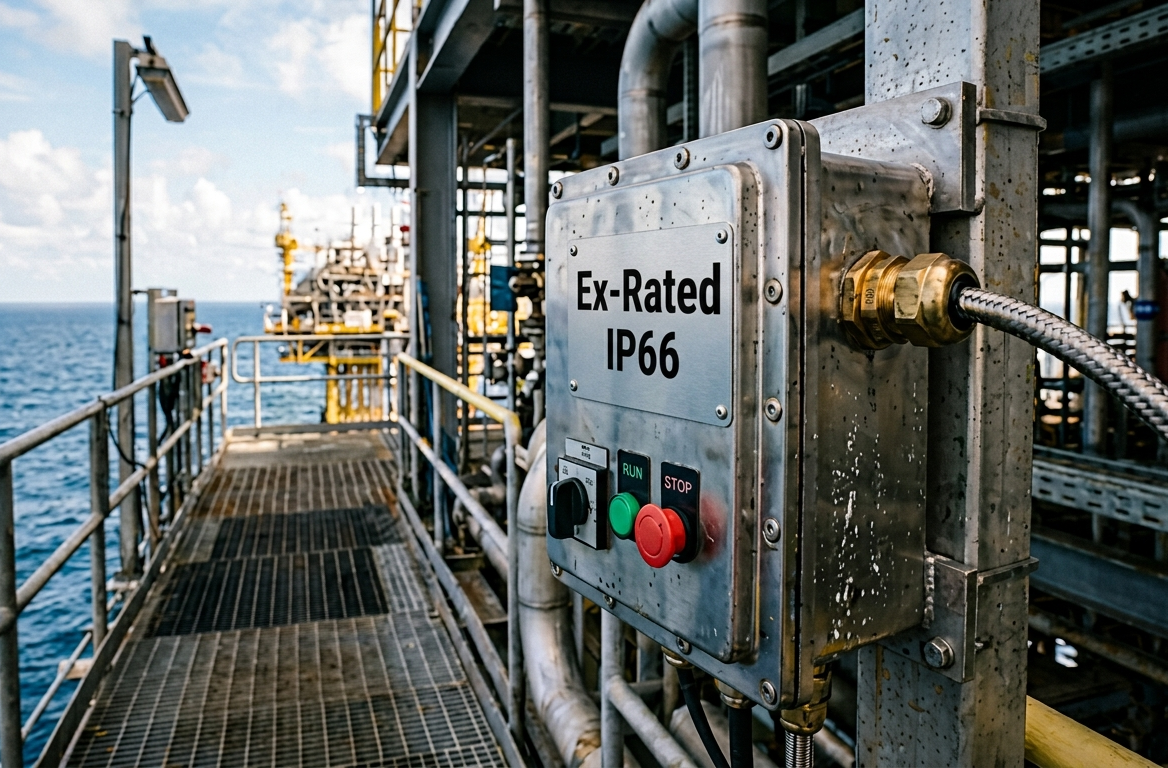
What the Codes Actually Mean for Your Installation
A maintenance team installs a new control station in Zone 1. The equipment is Ex-certified and marked IP65. Six months later, water ingress causes a short circuit inside the enclosure. The IP rating was appropriate. The installation was wrong.
This gap shows up more often than it should during Ex inspections across Malaysian and offshore facilities. The difference between what the IP code certifies and what the installation environment demands.
What the two digits actually mean
IP stands for Ingress Protection, defined in IEC 60529. The rating uses two digits where the first describes protection against solid particles, the second against liquids. Neither digit has anything to do with explosion protection. IP and Ex certification are separate and complementary requirements.
IP rating decoder
The most common ratings in industrial hazardous areas are IP54, IP55, IP65, IP66, and IP67. Each represents a different level of protection, and specifying the wrong one for your environment is a compliance failure waiting to happen.
IP ratings and Ex protection are two different things
An IP rating does not determine Ex compliance, and Ex certification does not automatically guarantee adequate environmental protection. Ex protection concepts (Ex d, Ex e, Ex n) govern how equipment contains or prevents ignition. IP ratings indicate how well the enclosure protects against dust and water. Both are required. Neither substitutes for the other.
An Ex d enclosure might carry IP54, which is adequate for a sheltered indoor Zone 1, but entirely inadequate for an offshore Zone 1 exposed to salt spray and pressure washing. The Ex certificate remains valid. The installation does not.
During Ex inspections, incorrect IP rating for the environment is one of the most consistently found non-conformances, particularly where equipment has been added or relocated without updating hazardous area documentation.
Minimum IP rating by environment
Where installations go wrong
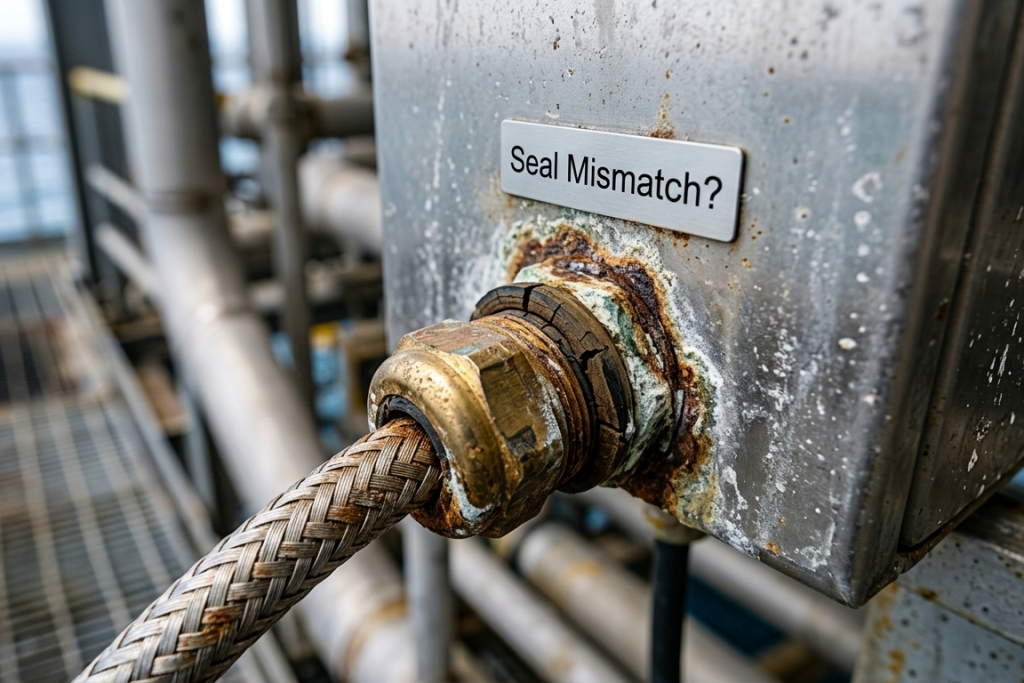
The most common IP rating failures fall into three categories. First, if the equipment is specified for one environment and relocated to a harsher one, the IP rating follows the original specification, not the new location. Second, the cable gland IP rating does not match the enclosure. A perfectly rated enclosure is immediately compromised if the gland has a lower rating. Third, damaged enclosures that are not replaced or resealed. For example, a cracked IP65 enclosure is not an IP65 enclosure.
All three are avoidable with proper documentation, periodic Ex inspection, and a clear policy on what IP rating is required where across your facility.
Book an Ex Equipment Audit
Torr Energy’s Ex inspection team checks IP ratings against your installation environment as part of every audit and tells you exactly where the gaps are.





Leave a Reply