
What Malaysian Operators Are Getting Wrong
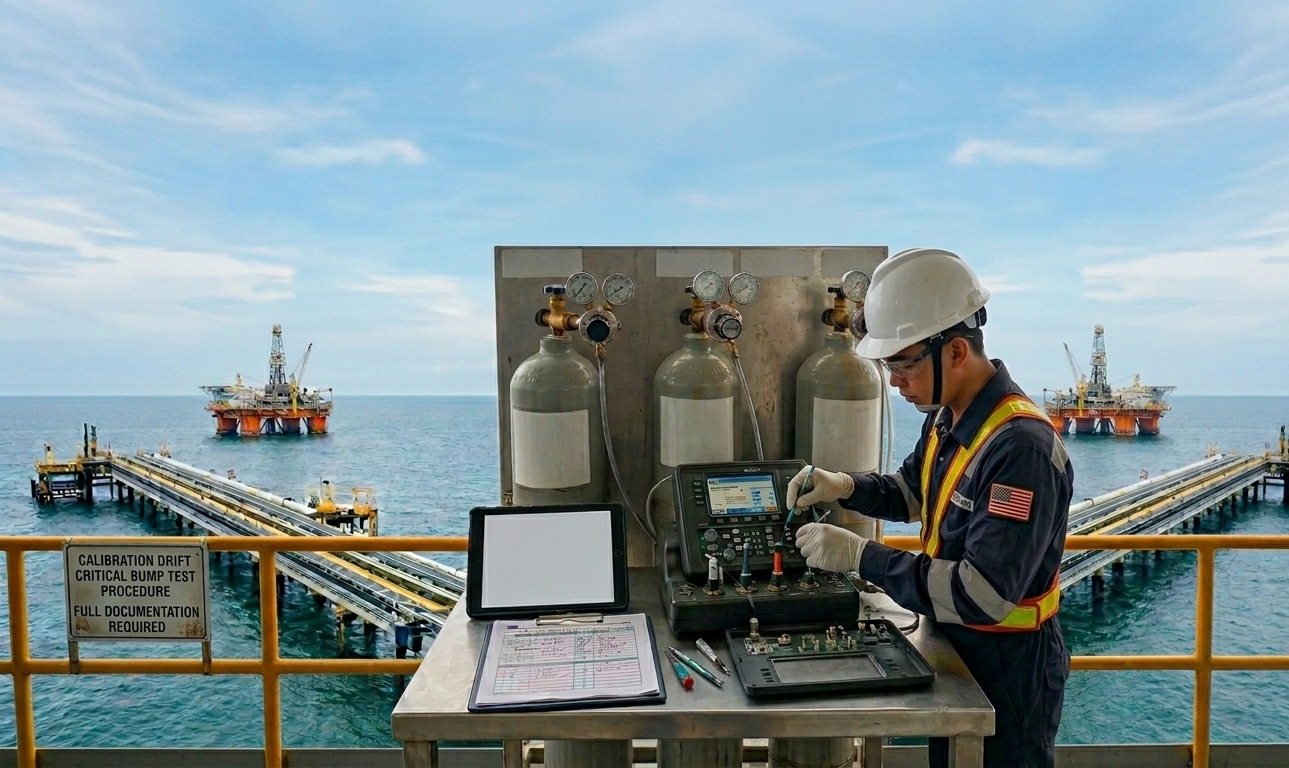
A gas detector passes its weekly bump test. The safety officer logs it as checked. Three months later the same detector fails to alarm during an actual gas release because the sensor had drifted out of calibration, and no one had run a full calibration in over fourteen months.
This is not a hypothetical. It is a recurring failure mode in industrial facilities across Malaysia, and it comes from a single misunderstanding: that a bump test and a full calibration are interchangeable. They are not.
What a bump test actually proves and what it doesn’t
A bump test exposes the detector to a known concentration of target gas at a level above the alarm threshold. If the detector alarms, the test passes. That is all it proves: that the detector will alarm when it detects gas above threshold.
A bump test does not verify accuracy. It does not confirm whether the detector is reading 20 ppm or 40 ppm when the actual concentration is 25 ppm. It does not verify response time. It does not confirm alarm thresholds are correctly set. And it produces no traceable, certified record of measurement performance.
A detector that passes a bump test every week can still carry significant measurement error that is enough to give a false sense of security when gas concentrations are rising slowly toward a dangerous level.
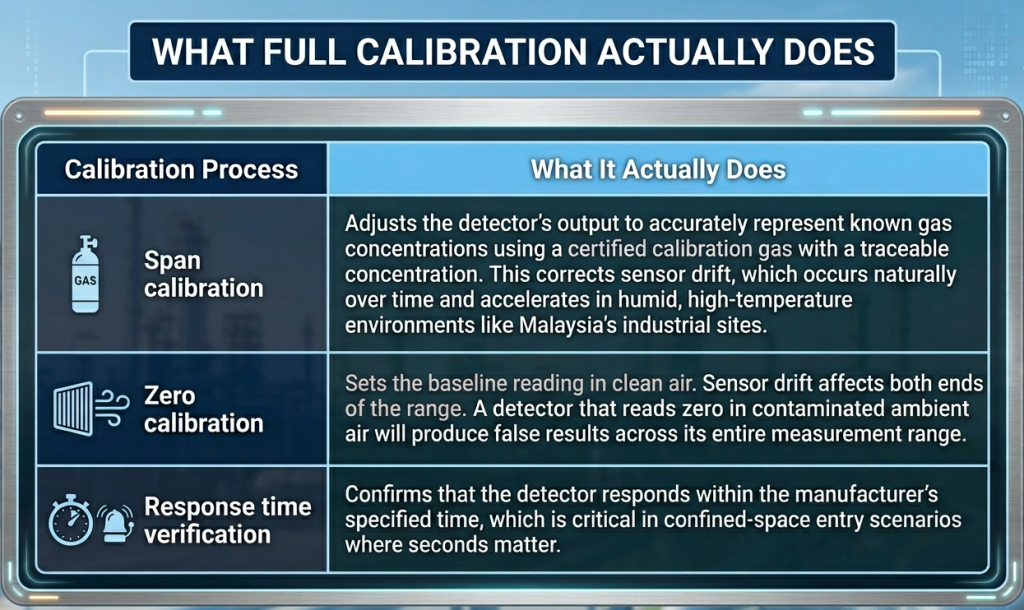
A full calibration produces a calibration certificate, which is ideally from an ISO 17025 accredited laboratory capable of documenting the gas concentrations used, before-and-after readings, adjustments made, and the uncertainty of measurement.
Bump test vs full calibration and what each covers
Recommended gas detector maintenance cycle
What the regulations say and where the grey area is
Manufacturer recommendations vary. Most specify a full calibration every 3 to 6 months. Malaysia’s DOSH guidelines align with international best practice: bump tests alone are not considered sufficient for gas detectors used in life-safety applications.
The grey area exists where there is no formal site policy. Without a written calibration programme and specifying which detectors, at what intervals, with what gas, by whom, with what documentation, facilities rely on habit and individual initiative. That is where gaps appear.
What Malaysia’s climate adds to the equation
Sensor drift accelerates under high humidity and elevated temperatures, which characterize virtually every industrial site in Malaysia. Electrochemical sensors for toxic gas detection are particularly susceptible. A calibration interval that works in a temperate European climate may be too long for a facility in Sarawak or a coastal refinery in Johor. When in doubt, calibrate more frequently and document the readings.
Calibrate with Torr Energy’s Accredited Lab – Our calibration laboratory uses certified traceable gases and issues full documentation so your gas detector records stand up to any audit.



Leave a Reply