
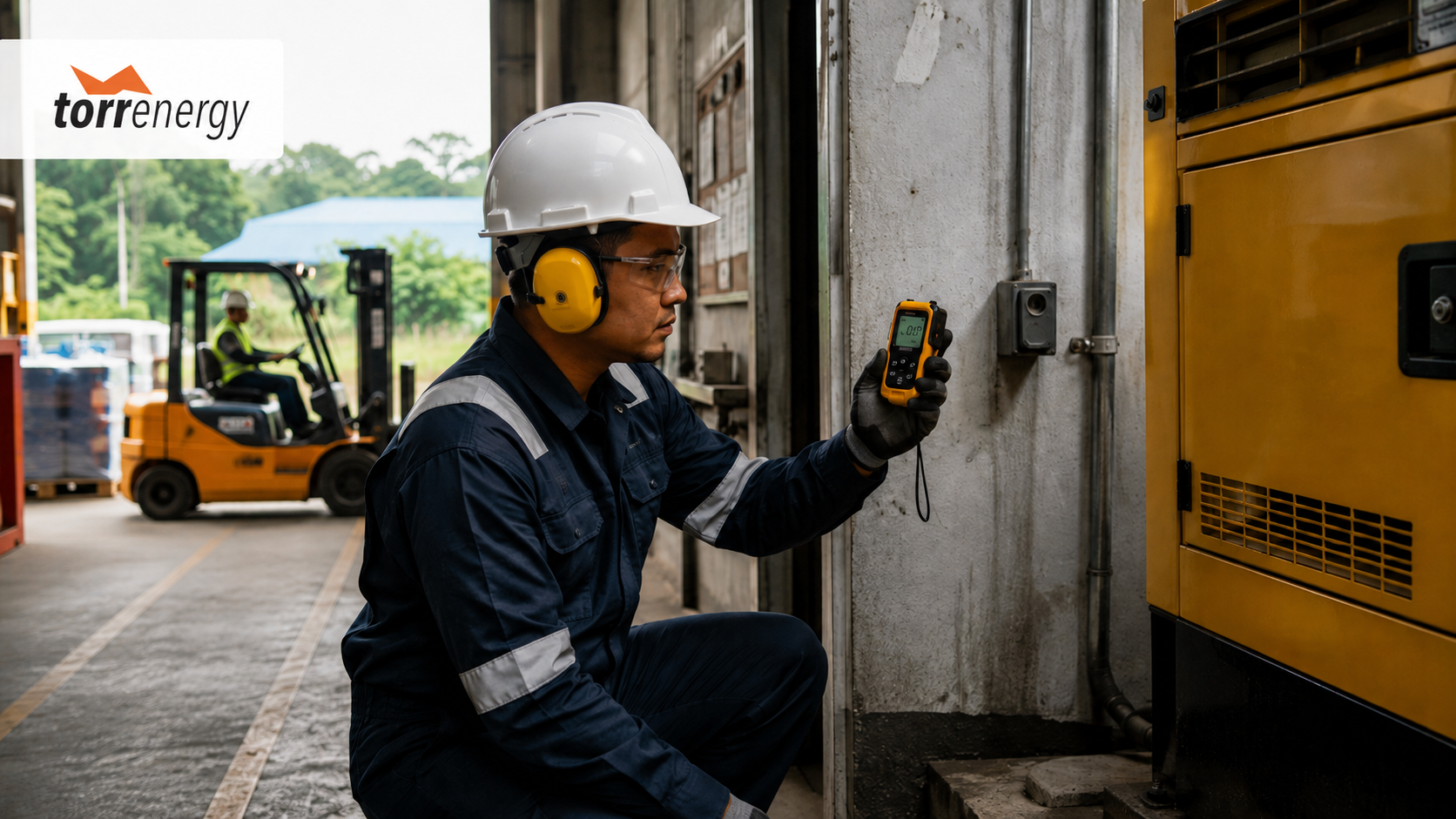
Carbon monoxide is described as the “silent killer” for good reason: it has no colour, no smell, and no taste. You cannot detect its presence with your senses. By the time symptoms appear, such as headache, dizziness, and nausea, the exposure may already have reached a level that impairs judgement and slows the response that would allow you to remove yourself from the hazard. At higher concentrations, it incapacitates and kills without warning.
CO is not an exotic industrial chemical. It is produced by the incomplete combustion of any carbon-containing fuel, including petrol, diesel, LPG, natural gas, kerosene, and charcoal. That means it is produced by generators, forklifts, internal combustion engine vehicles, gas cooking equipment, boilers, and any other combustion process that is not burning cleanly or is operating in a confined space without adequate ventilation. These are all extremely common in Malaysian workplaces.
The reason CO exposure remains underrecognised in Malaysian workplaces is simple: it is invisible and its symptoms are easily mistaken for other conditions. Headache and dizziness at the end of a shift are attributed to fatigue, dehydration, or the heat. The connection to a generator running in the adjacent room or a forklift operating in a poorly ventilated warehouse is not made until someone loses consciousness. Sometimes, the connection is still not recognised.
Where CO is produced in Malaysian workplaces
Why CO is different from other gas hazards
Most workplace gas hazards that Malaysian businesses are aware of, including LPG leaks, natural gas leaks, and H2S in oil and gas environments, produce either a distinctive smell or have defined explosive risk characteristics that make them obvious hazards once a leak occurs. CO is different in three important ways.
First, it is odourless. There is no sensory warning of exposure. Second, it does not present an explosion risk at the concentrations typically found in workplace exposure events. This means it does not trigger the same kind of immediate alarm response as a gas that has an obvious flammable hazard. Third, its symptoms, such as headache, nausea, and dizziness, are non-specific and are routinely attributed to unrelated causes. The cumulative effect is that CO exposure incidents in workplaces are frequently either not recognised at all, or recognised only when a worker collapses.
What CO exposure does to the body
The specific danger of CO is that it impairs the victim’s ability to recognise that they are in danger. A person developing CO poisoning does not feel fine until they suddenly feel very unwell. They feel gradually more tired, more confused, more headachy in ways that do not produce the alarm signal that “I am being poisoned.” This is why CO detection must rely on a technical sensor that sounds an alarm rather than relying on affected workers to self-identify their exposure and remove themselves.
What Malaysian workplaces should have in place
For any workplace where combustion equipment operates, such as generators, gas kitchens, forklift operations, and boiler rooms, CO detection is appropriate and, in many cases, the only reliable means of identifying hazardous concentrations before workers are affected. CO detectors designed for industrial use alarm at 35 ppm (the ACGIH TLV-TWA for CO) and at a higher alarm level, typically 100–200 ppm, for immediate evacuation. They are modest in cost and straightforward to install.
Generator rooms and semi-enclosed generator locations need CO detection and ventilation interlocks. These may include automatic fans that start when CO is detected and alarms that alert personnel before concentrations reach hazardous levels. Forklift operating areas with enclosed or semi-enclosed structures need ventilation design that prevents CO accumulation during peak operational periods. Gas kitchens need CO detection in addition to natural gas or LPG leak detection because the two hazards are different and require different sensors.
Equally important is that staff understand CO as a hazard, including what produces it, why it cannot be detected by smell, and what to do if a CO alarm activates: leave the area immediately, call for help, and do not re-enter until the area has been ventilated and confirmed safe by CO measurement. The instruction sounds simple. But it requires that the CO alarm means something to the workers who hear it. This requires training, not just a detector on the wall.
Does Your Workplace Have CO Detection Where It Needs It?
Torr Energy supplies and installs carbon monoxide detection systems for generator rooms, warehouses, kitchens, and other combustion environments across Malaysia. Contact us to discuss detection requirements for your facility.
Talk to Torr Energy →

Leave a Reply