

Why Is Accuracy vs Durability Important In Fire And Gas?
Importance of Accuracy in Fire and Gas
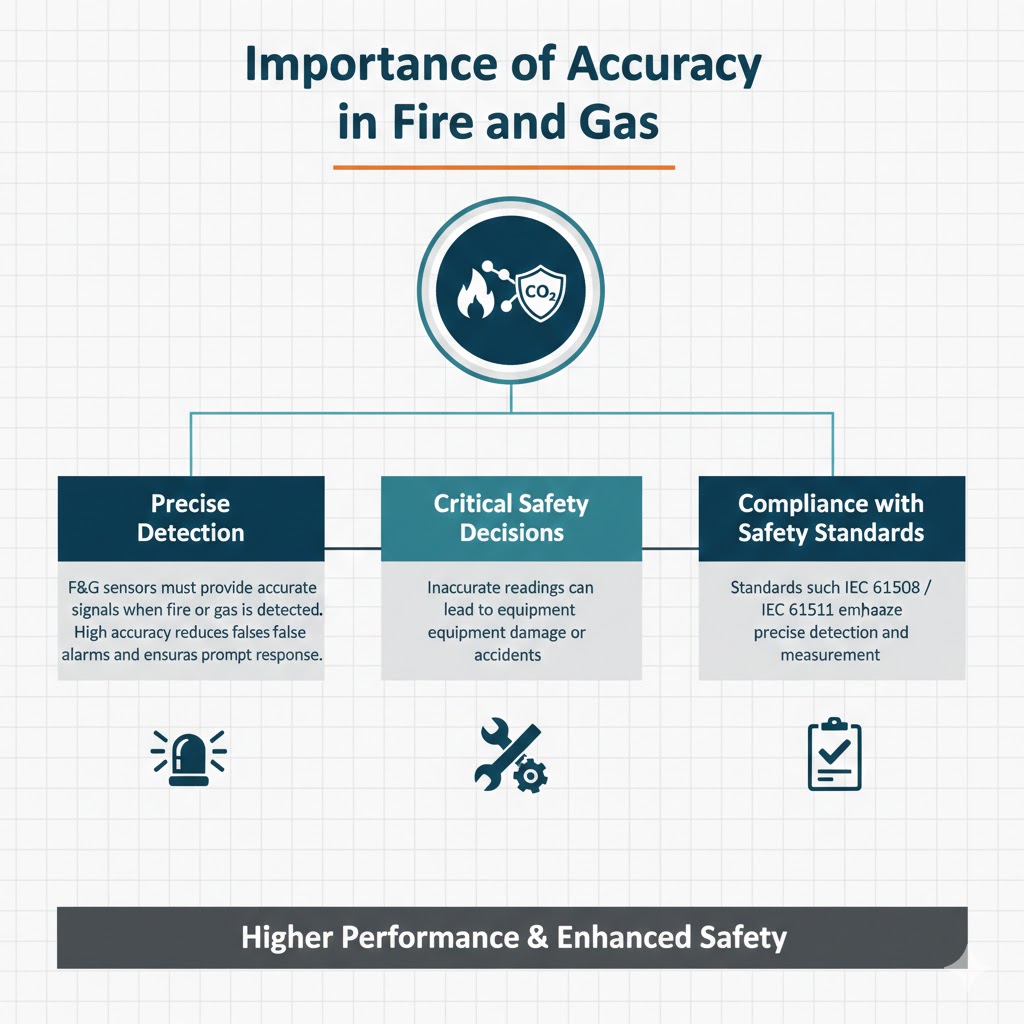
- Precise detection of fire and gas
- F&G sensors must provide accurate signals when fire or gas is detected.
- High accuracy reduces false alarms and ensures prompt response.
- Critical safety decisions
- Inaccurate readings can lead to equipment damage or accidents.
- Compliance with safety standards
- Standards such as IEC 61508 / IEC 61511 emphasize precise detection and measurement.
Importance of Durability in Fire and Gas
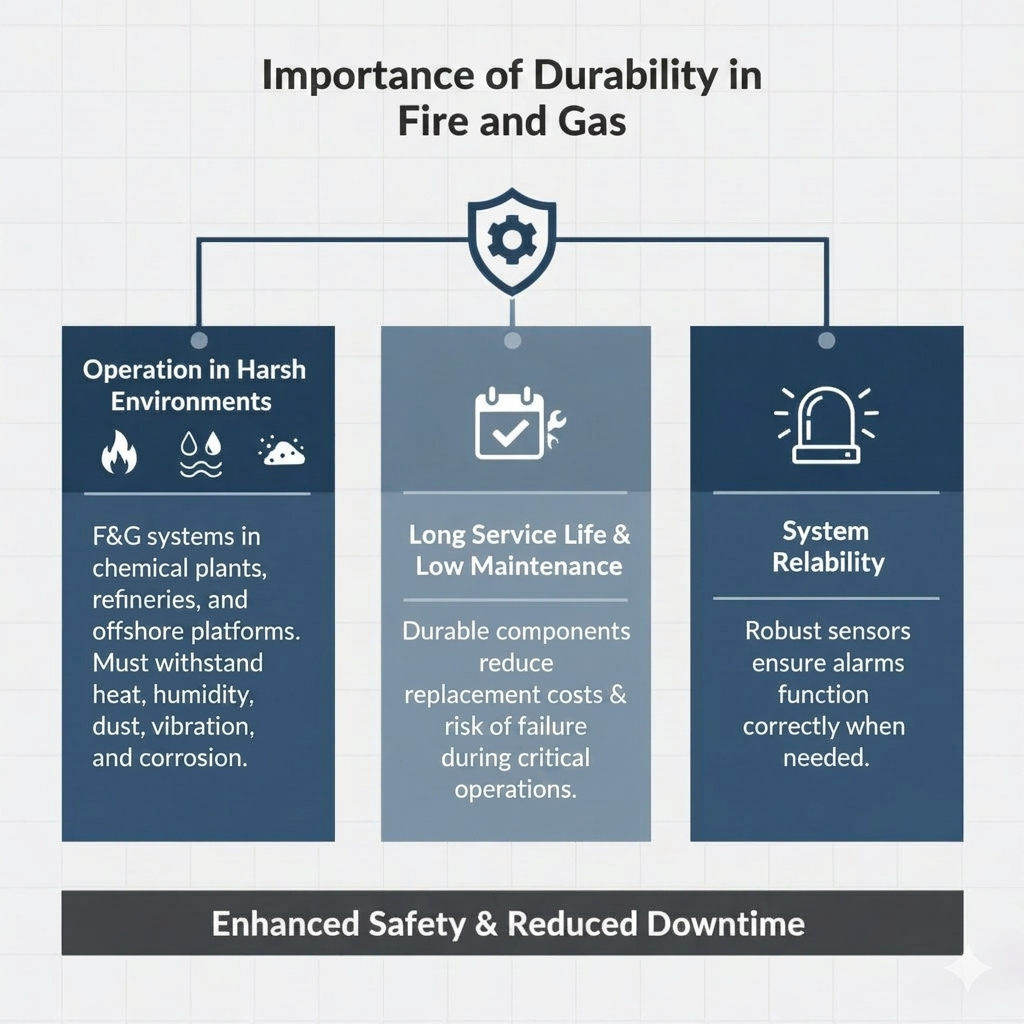
In Fire and Gas (F&G) systems, accuracy and durability are critical and occur in components, equipment, and situations essential for detecting fire or gas.
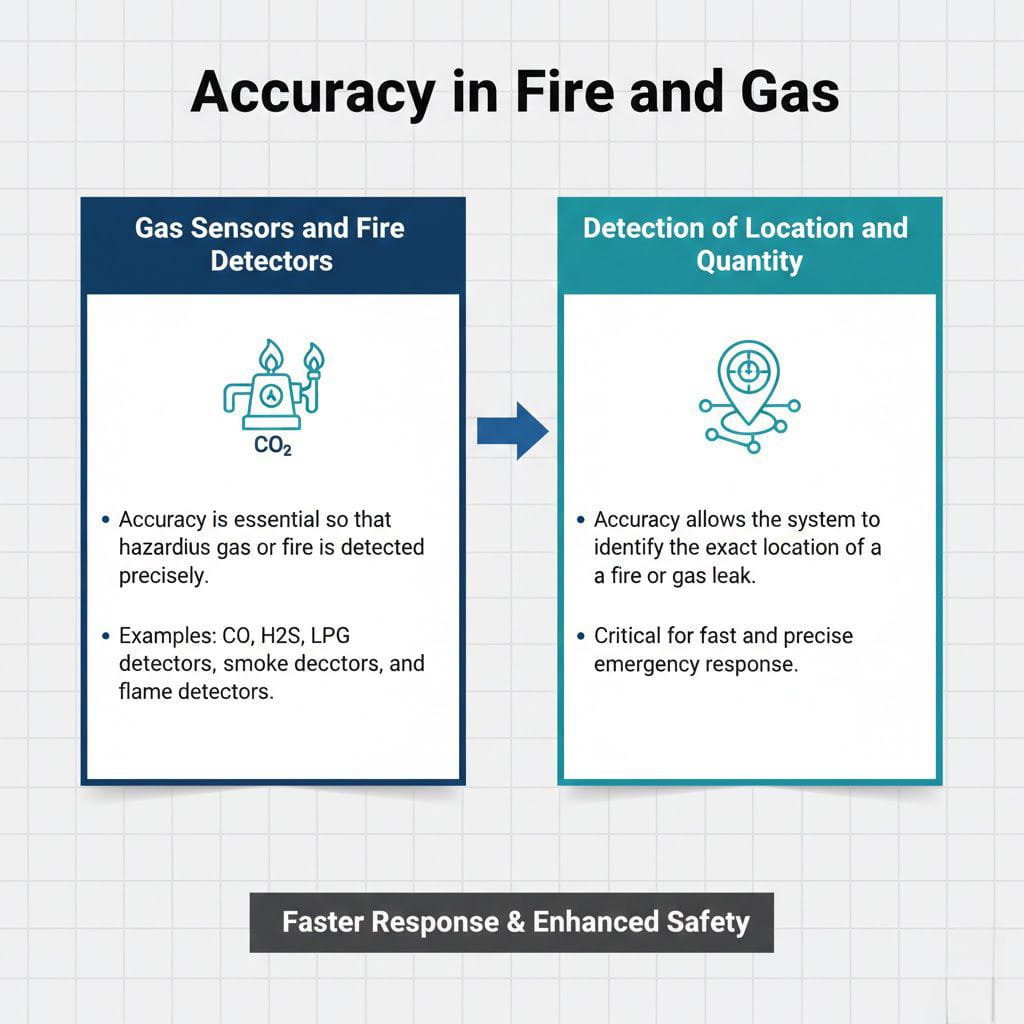
Accuracy in Fire and Gas
- Gas sensors and fire detectors:
- Accuracy is essential so that hazardous gas or fire is detected precisely.
- Examples: CO, H2S, LPG detectors, smoke detectors, and flame detectors.
- Detection of location and quantity:
- Accuracy allows the system to identify the exact location of a fire or gas leak.
- Critical for fast and precise emergency response.
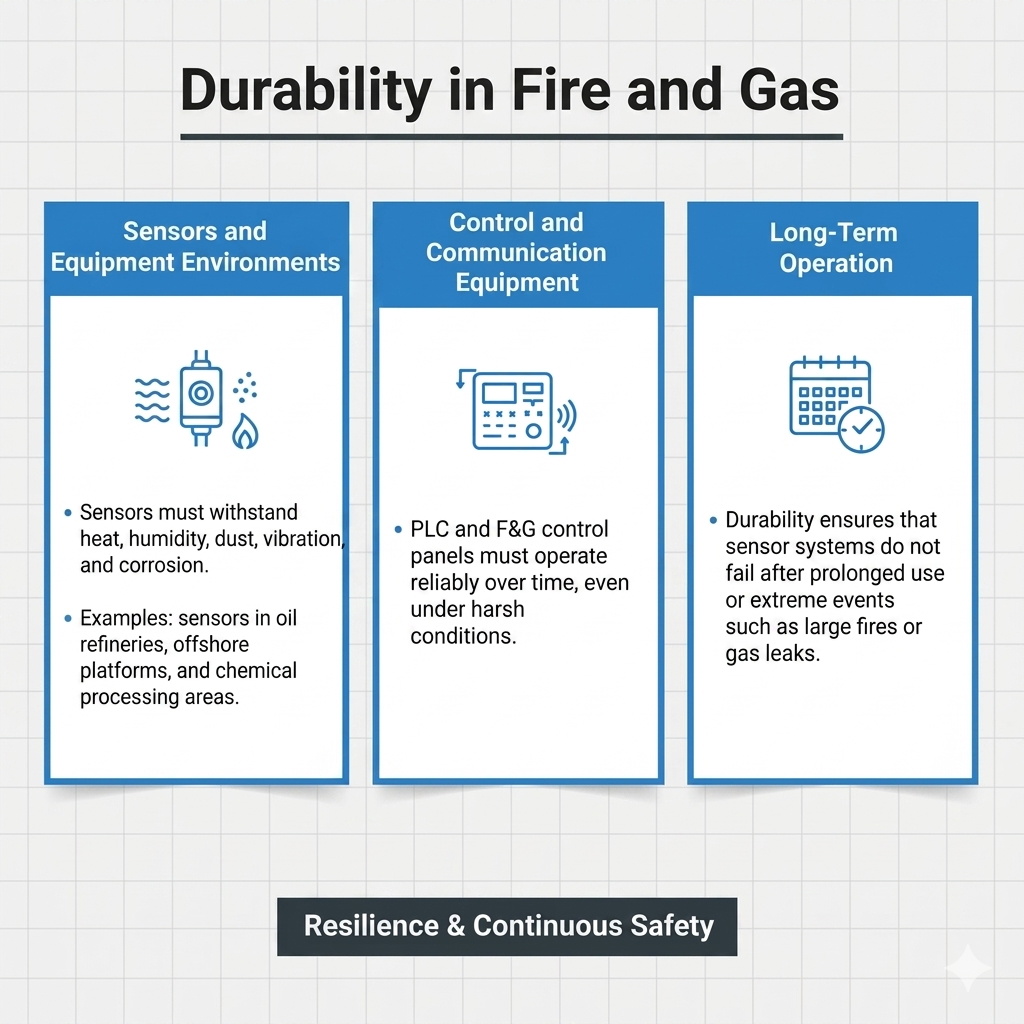
Durability in Fire and Gas
- Sensors and equipment in harsh environments:
- Sensors must withstand heat, humidity, dust, vibration, and corrosion.
- Examples: sensors in oil refineries, offshore platforms, and chemical processing areas.
- Control and communication equipment:
- PLCs, F&G control panels, and alarms must operate reliably over time, even under harsh conditions.
- Long-term operation:
- Durability ensures that sensors and systems do not fail after prolonged use or during extreme events such as large fires or gas leaks.
Accuracy
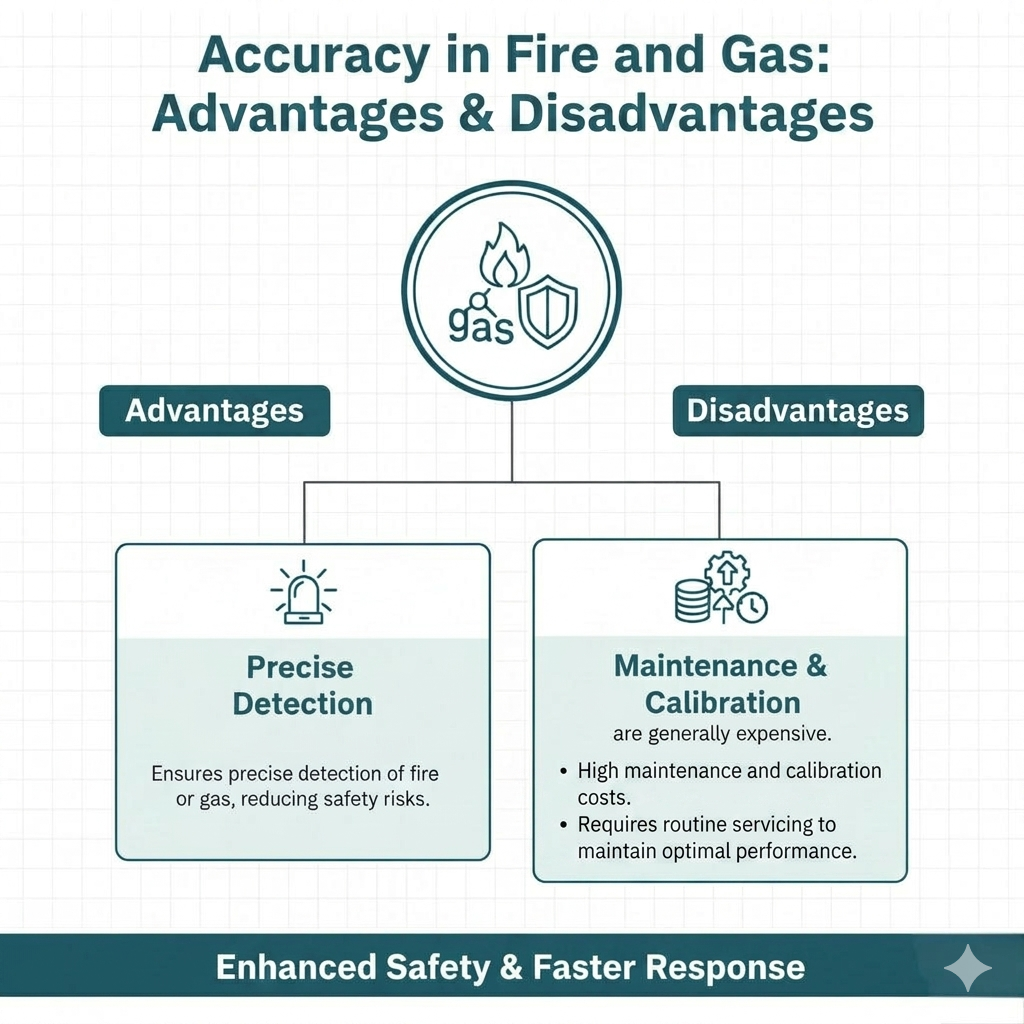
Advantages:
- Ensures precise detection of fire or gas, reducing safety risks.
- Allows immediate and reliable response during fire or gas leak incidents.
- Minimizes false alarms, saving operational time and costs.
Disadvantages:
- High-accuracy sensors are generally expensive.
- Require regular calibration and maintenance to maintain optimal performance.




Leave a Reply